



Your ceiling fan working on one speed only is frustrating because generally it’s a slower or faster speed than the one you’re looking for!
There are a few reasons this may be happening. Some you can troubleshoot yourself, but others you will need to give a licensed residential electrician like Voltora Industries a call.
We’re going to look at all the reasons and delve into any electrical safety considerations that need to be taken into account. As always, if you have any questions the Voltora team is here for you. Just give us a ring on 1300 799 430.
Common Reasons Your Ceiling Fan is Stuck on One Speed
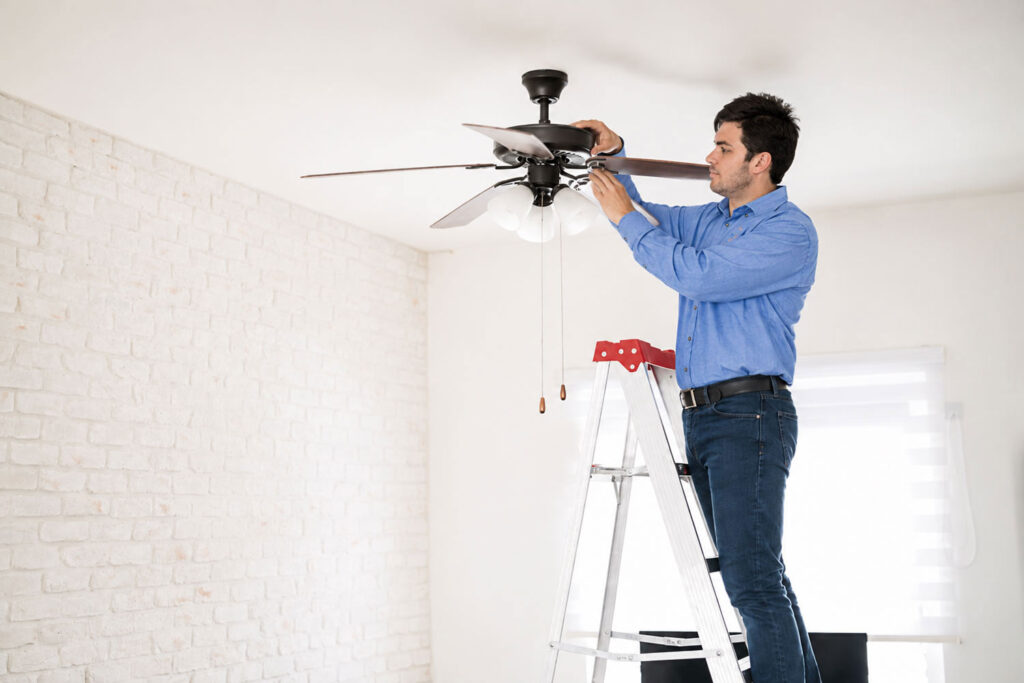
These are the five most common reasons we encounter for a fan being stuck on one speed.
1. Faulty Capacitor
The capacitor helps the fan motor operate at different speeds. It’s an electrical component that isn’t immune to wear and tear. If it starts to fail, some fan speeds will stop working. You might also notice a humming sound, or your fan will take longer than usual to start up.
2. Faulty Speed Switch
If you’re in an older property, you may have older-style ceiling fans with a pull-chain speed switch. Pulling the chain cycles through the available speeds.
These switches can wear out over time, as do the wall-mounted fan controllers. Definitely worth checking out the switch or controller if your fan has stopped changing speeds.
3. Problem with the Remote or Receiver
If your fan is controlled by a remote, there are a couple of things that could be going wrong. This one sounds glaringly obvious, but trust us, it happens more than you think – check the batteries in the remote. Flat batteries mean your remote isn’t sending its signal through so your fan won’t be changing speeds.
There could also be a problem with the remote receiver inside the fan which can prevent the fan from responding properly to speed commands.
4. Incompatible Wall Controller
If a wall controller has recently been installed or replaced, it may not be compatible with the ceiling fan.
Different fans use different control systems. If your new controller isn’t the right match, you’ll get issues with speed and operation. Your electrician can troubleshoot this for you and pinpoint if you have the wrong wall controller installed.
5. Electrical Fault
A problem with the wiring or electrical connections can also affect your ceiling fan operation. Please don’t attempt to DIY electrical problems yourself – they need to be investigated by a licensed electrician. Keep reading to find out the telltale signs that you need an electrical inspection to solve the single speed ceiling fan issue.
Is it Safe to Use my Ceiling Fan Stuck on One Speed?
This issue normally doesn’t present an electrical safety risk. If you’re comfortable with single-speed operation, you can keep using the fan.
However, there are other issues that could present themselves alongside your speed problem that can be signs of an electrical risk. If you notice any of the below symptoms, don’t ignore them. Turn off your fan and book a Voltora electrician to perform an electrical inspection.
- A burning smell
- Buzzing or crackling
- Excessive heat from the wall controller
- Flickering lights
- The fan starting and stopping
- A circuit breaker or safety switch tripping
Can I DIY FIX the Ceiling Fan Speed Issue?
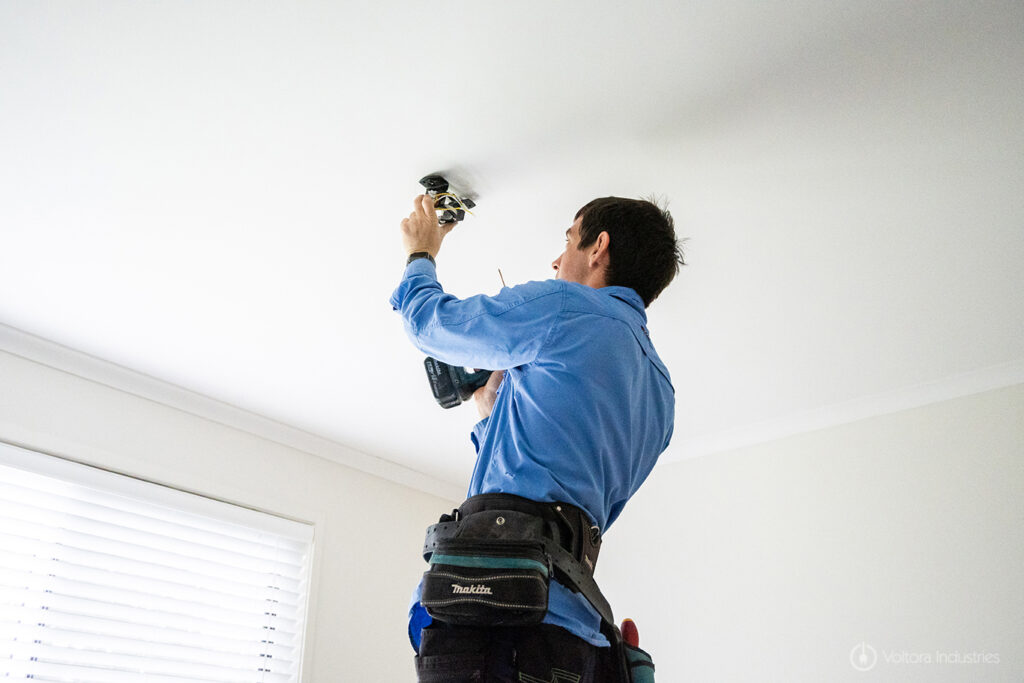
In most cases, DIY electrical work is unsafe, illegal and definitely not recommended. With a fan stuck on one speed, there are some troubleshooting steps you can take yourself.
If the fan has a remote, try replacing the batteries and check that you’re using the correct settings. You can also check whether the problem affects all speeds or only one particular setting.
Anything more than that should be taken on by an electrician. You can’t try to DIY electrical components such as capacitors, receivers and wiring. If you open the fan or try replace these parts yourself, you’ll expose yourself to live electrical components. Your safety is very important to us, so please don’t go down this path.
Do I Need to Replace My Ceiling Fan?
Not necessarily – if you troubleshoot the problems with the above steps and get an electrician in if required, there’s a good chance your fan is fixable. Replacing a dodgy component like a capacitor, switch, receiver or controller could be all that’s needed.
But if you have an older fan with several problems, replacement may be a better option. An electrician can assess the fan’s condition and help you decide whether a repair makes sense.
Contact Voltora Industries for All Ceiling Fan Problems
Ceiling fan issues can be frustrating, especially during Brisbane’s hotter summer months. If yours is stuck on one speed and you can’t get to the bottom of it, we’ll send one of our electrical repairs experts to sort it out.
If your fan is making unusual noises, smells like it’s overheating, struggles to start or causes the power to trip, then we’d advise arranging an inspection sooner rather than later.
Get in touch with any questions today, or get a free quote here. We’re always available to help out.
Ceiling Fan Speed FAQs
What causes a ceiling fan to lose its speed settings?
A faulty capacitor, speed switch, remote receiver, wall controller or electrical connection can stop a ceiling fan from changing speeds.
Why is my ceiling fan stuck on high?
A faulty capacitor or speed control can cause a fan to remain on high speed. The remote or receiver may also be responsible on electronically controlled fans.
Why is my ceiling fan running slower than usual?
A worn capacitor, motor problem or electrical fault can cause a ceiling fan to run below its normal speed. Dust buildup and mechanical issues can also place extra load on the motor.
How do I know if my ceiling fan capacitor needs replacing?
A fan that struggles to start, runs slowly, hums or loses one or more speed settings may have a faulty capacitor. An electrician can test the component to confirm the problem.
Can a ceiling fan remote stop the fan from changing speed?
Yes. A faulty remote, flat batteries or a problem with the receiver can prevent the fan from responding to speed commands.
Can I replace a ceiling fan capacitor myself?
Ceiling fan capacitors are electrical components and should be replaced by a licensed electrician. The fan should be isolated from the power supply before any electrical work is carried out.
Lets get started