



The importance of electrical safety in your home can’t be overstated. If something doesn’t look right or is bothering you, like power point sparks, you’re doing the right thing by investigating the problem. Always feel free to hop on a call and chat to one of our Brisbane electricians – we’re here to keep your electrical systems safe.
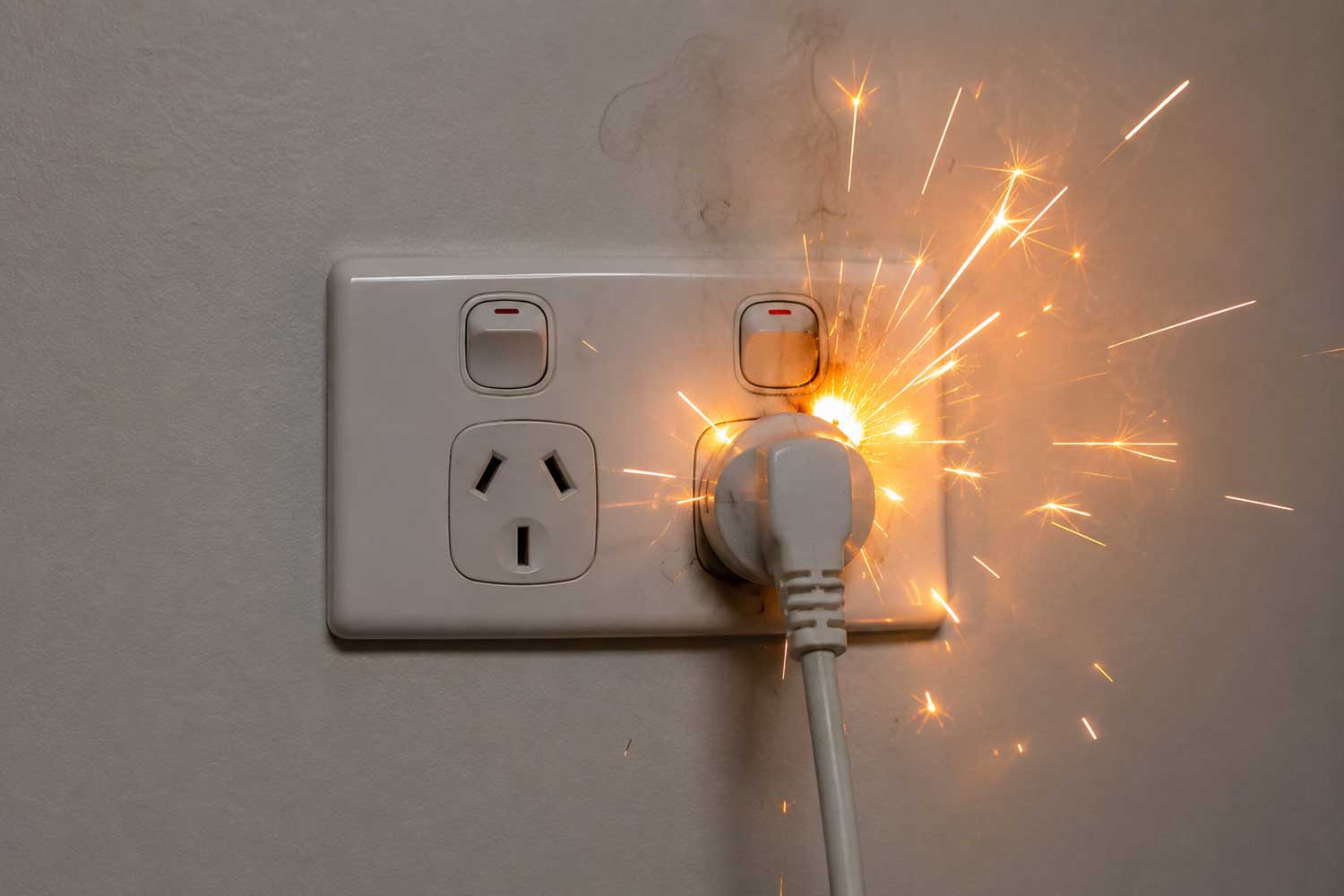
One question we get asked a lot concerns the sparks that can come out of your power point when you plug in an appliance. Is that flash of blue light normal, or is it something to worry about? The answer depends on the nature of the spark, so in this article we’re going to explain when it is a problem and when you likely don’t have anything to be worried about.
A Small Spark Isn’t Always a Problem
If there’s a brief and small spark when you plug something in, that’s usually the power point just doing its job. This happens often with appliances that draw a big current, like a kettle or heater. A quick, small spark usually isn’t cause for concern.
But – if that spark is big, bright or makes a popping sound, you’ve got a problem on your hands. Check the socket for discolouration and see if you notice a burning smell. These are also warning signs that you need to stop using the power point and call an electrician.

What Causes a Large Power Point Spark?
If you’re noticing larger sparks, or more frequent sparks flying from power points, it could be down to a few reasons. It helps to understand the underlying cause.
Loose Power Point Wiring
Connections get loose over time – it’s unavoidable. It could be because the initial installation was rushed, vibrations over the years have played a part, or the newly built house settled and moved components slightly in the process. If the wire isn’t sitting flush against the terminal, current has to jump across the gap. This is ‘arcing’, and it creates heat.
Worn Out Power Point
Power points don’t last forever. The contact points your plug pins slide into wear down over time. This can create extra resistance and sparking.
Dodgy Appliance Plug
Sometimes the power point is fine and the problem is the appliance plug itself. Bent, corroded, or loose pins can cause sparking. If it’s an older device or the plug looks like it’s been through some hard times, this could be what’s behind the sparks you see.
Moisture Nearby
Liquids and electricity aren’t a good match when it comes to safety. Moisture can contribute to power points sparking, especially if they’re in kitchens, bathrooms, laundries, or on outdoor walls where they experience more humidity and condensation. That moisture can get inside and corrode the contacts. Safety switch protection is vital for these power points.
Overloaded Circuit
If you’ve got a circuit that’s working hard and you add another power-hungry device, you might see sparking, dimming lights, or a tripped breaker.
Short circuit
If a live wire touches a neutral or earth wire somewhere along the line, you’ll often see sparking at the point, plus breakers tripping without warning.
You’re Right to be Concerned
Sparks are a concern, so whenever you see them coming out of a power point, you’re doing the right thing by following up on what’s causing it and whether it’s dangerous. They are more than just annoying – they can be a fire risk. If you have repeated arcing across loose connections, the heat can spread to timber or nearby insulation, and you’re heading to a fire starting.
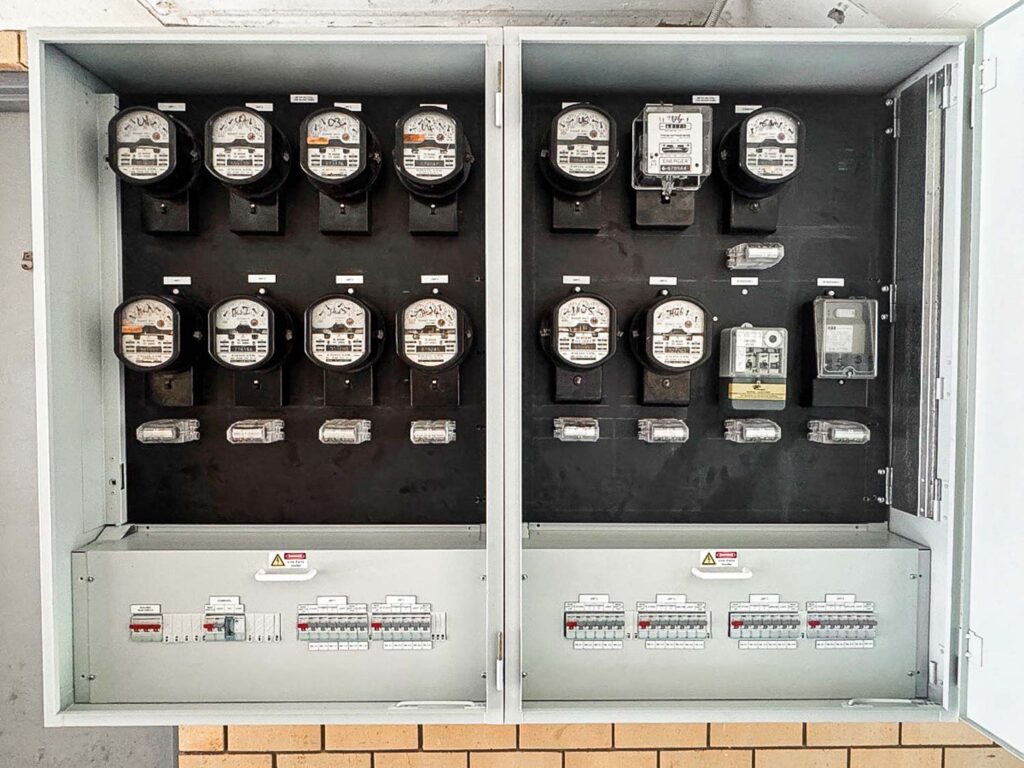
Modern switchboards have the safety switches designed to prevent this danger. Older homes are more susceptible as the switchboard may not have been upgraded in a while. If you have any concerns, it’s always worth getting a residential electrician to check your switchboard.
When to Call an Electrician?
If you get a single small spark when you plug a high-draw appliance into the power point, it’s worth keeping an eye on it. If there’s no smell or marks and it seems an isolated incident, you don’t need to call an electrician.
You should definitely give us a call if you’re noticing any of the following:
- There’s a spark every time, or with more than one appliance
- The spark is big, loud, or you can actually see it jump
- There’s a burning smell or scorch marks around the power point
- The power point or its cover feels warm to touch
- It’s in a kitchen, bathroom, or damp area and doesn’t seem to be on a safety switch
- The breaker trips whenever there’s a spark.
If any of that sounds familiar, stop using the power point and unplug whatever’s connected. Get a certified electrician to come and take a look. Until you’ve sorted it, consider it a fire risk.
Contact Voltora Industries
We take electrical safety seriously. Our electricians are available to keep your home or business premises’ electrical system in mint condition – working as it should without presenting any danger to people or property. Get in touch here or give us a call on 1300 799 430.
Power Point Sparks FAQs
Is it normal for a power point to spark a bit when I plug something in? A quick, small spark with a high-draw appliance can be normal. It shouldn’t be big, loud, or happen every time with the same device.
Can a sparking power point start a fire? Yes, it can. You can get heat build-up that can cause an ignition of nearby materials.
Should I try to fix it myself? Any electrical work needs to be done by a licensed electrician. Please don’t attempt to DIY your electrics. It’s not safe dealing with live circuits.
Does a sparking point mean my whole house needs rewiring? Probably not. The problem could just lie with the single powerpoint. Get an electrician to inspect and let you know what’s going on and what work needs to be done.
Why does this happen more in older homes? The electrical systems have been around longer so they’re generally more worn out than modern systems. They also may not have up-to-date safety switches fitted.
Lets get started