
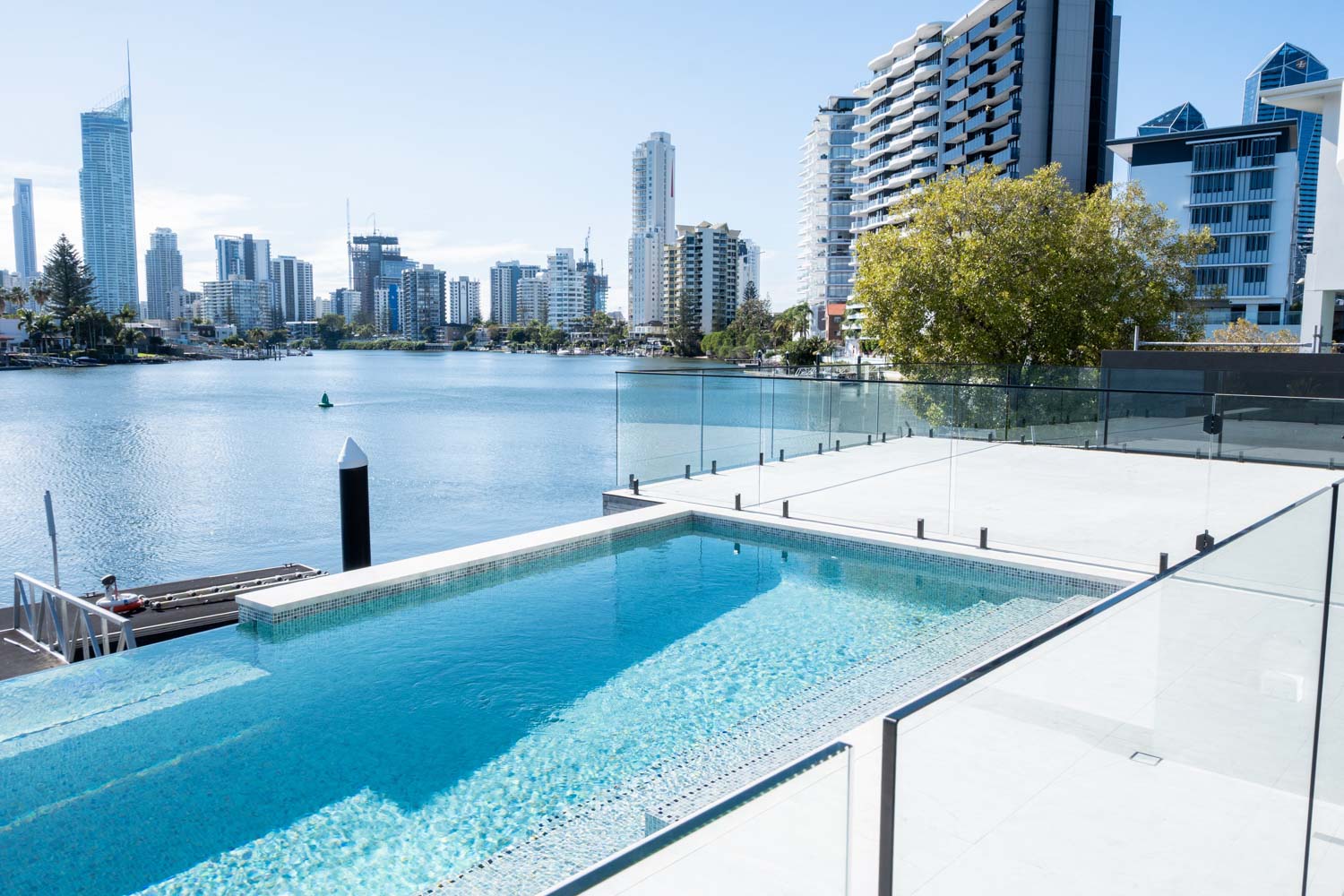



There are many moving parts to building a pool at your Brisbane home. Your builder will usually take care of council approvals, excavation, building or installing the shell and sorting the plumbing.
The pool or spa electrics are a different story though. Unless your builder has a licensed sparky on their team, you’ll need a pool electrician to handle these. Similarly, with any electrical problems down the track you’re going to need to give a company like Voltora Industries a ring to take care of them.
Water and electricity is a risky combination, so it’s not worth taking any chances with your pool electrics.
Can Pool Builders Do Electrical Work?
They sometimes do, but more often than not the electrical work is outsourced to an electrical company. This is because a pool builder focuses on that function as their primary service – they don’t need to be a licensed electrician to do it. To have an electrician on their team would be overkill as its not the core focus of their business.
It’s worth checking when you’re organising your pool build, though. Some builders will have a preferred electrician they will work with and can recommend to you. Others will leave it completely up to the homeowner. Either way, the pool electrics need to be done right so everything is safe and compliant.
When a Pool Electrician is Required
When you’re building your pool, there are two important stages for the electrical installation:
Rough-in (Before Shell Pouring)
Before concrete goes in, bonding conductors and conduit runs for pump and lighting circuits must be laid – this can’t be retrofitted. The builder can install these, and then an electrician signs off on them after checking everything meets Queensland safety standards.
Fit-off and Certification (After Equipment Installation)
Once the pool has been built and all equipment (pump, lights, chlorinator, heat pump) is installed, the electrician connects all the circuits and tests the system. They’ll issue an Electrical Certificate of Testing and Safety, which is required for the final inspection certificate.
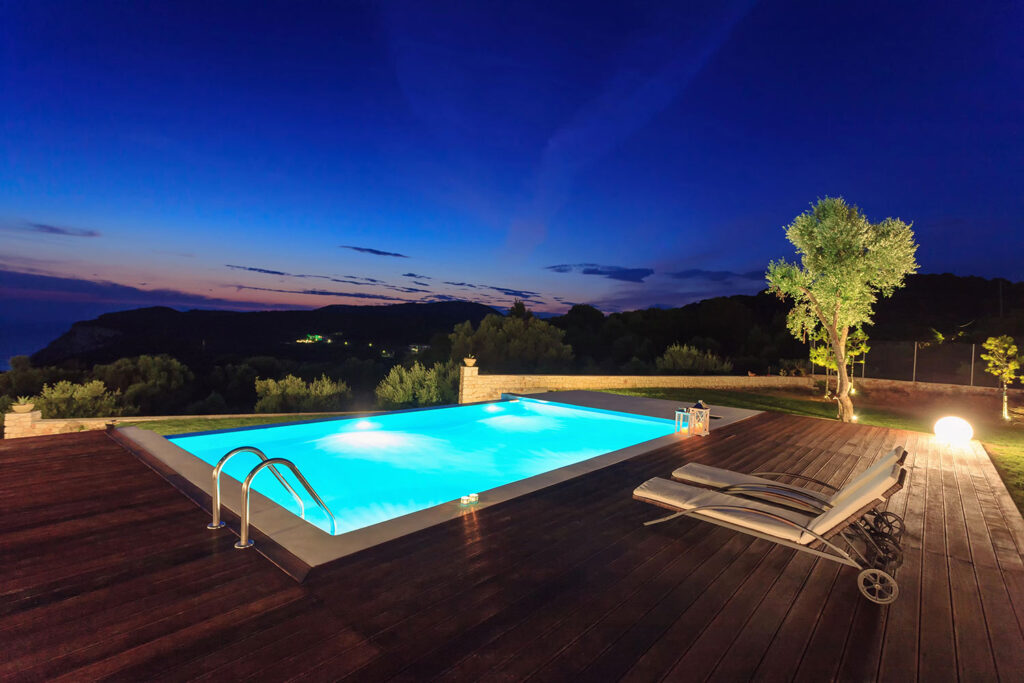
The Electrical Work a New Brisbane Pool Requires
There are strict requirements for swimming pool electrical installations in Queensland. They fall under AS/NZS 3000 (the Australian Wiring Rules) and the Electrical Safety Regulation 2013.
Building a new swimming pool will involve the following:
Equipotential bonding
Any metal object (larger than 100 mm) within 1.25 metres of the water must be linked to a single earth point. This includes ladders, fence posts, light stands, shade sail fixtures and so on. Bonding will stop different metal surfaces from having different voltages, preventing electric shocks for swimmers. A licensed electrician is required for this step.
Dedicated circuits
Each major component of the swimming pool electrics (such as the heating, the pump and the chlorinator) needs to be on its own individual circuit. This prevents overloading and makes isolating problems more seamless.
RCD (safety switch) protection
According to the Electrical Safety Regulation of 2013, each of the above-mentioned circuits must be protected by a Residual Current Device safety switch. This switch will cut off in milliseconds if it detects a fault, preventing electrical current from reaching anyone in the water.
Zone compliance
There are strictly restricted electrical zones around pools. Zone 0 is within the pool, Zone 1 is two metres from the pool edge and Zone 2 is two to three metres from the pool edge. No power points, switches or switchboards can be in Zone 1. In Zone 0, no general electrical equipment is allowed and lighting must be specialised and low voltage.
Weatherproof power points
Pool area power points must be appropriately rated for outdoor and wet environments. They must be RCD-protected and can’t sit in exclusion zones. Extension leads are not to be used near a pool.
Prescribed electrical equipment (from April 2025)
Pool lights and pumps are classified as prescribed electrical equipment under Queensland’s Electrical Safety Regulation 2013. This means they need to be installed, maintained and repaired by a licensed electrician. No DIY electrical work on them, please!
Compliance certificate
When your electrician has completed the electrical work on your new pool, they will issue an electrical safety certificate. This certifies your pool electrics have been tested and meet Queensland standards – without one of these, you can’t use your pool.
Does the Pool Safety Certificate Cover Electrical Work?
No it doesn’t. The Queensland pool safety certificate is concernd with fencing, gates and barriers – its aim is to be certain small children can’t access the swimming pool.
A current pool safety certificate doesn’t mean your pool electrics are compliant or safe.
Will Your Current Switchboard Handle a New Pool?
A switchboard upgrade is often required to accommodate the extra circuits and energy draw of a swimming pool. Brisbane homes in established suburbs like Chermside or Wavell Heights can be built as far back as the 1870’s, and often the switchboard is the original one. It won’t be designed to cope with the pressures of modern energy draws, let alone having a swimming pool on top of that.
A pool will add three or more electrical circuits, each requiring proper RCD protection. It’s worth getting your switchboard assessed and upgraded if necessary before the build begins.
What about spas and above-ground pools?
The same rules apply regardless of pool type. Bonding requirements under AS/NZS 3000 cover above-ground pools with metal frames and portable spas connected to mains power. The April 2025 prescribed equipment classification applies to water equipment in spas, paddling pools, and bathtubs as well. There is no exemption for smaller or temporary installations connected to mains electricity.
Contact Brisbane Pool Electrician Voltora Industries
Voltora Industries works with Brisbane homeowners and pool builders to ensure their new pools are safe and compliant, and to help with any electrical issues during your pool ownership journey. Based in Brendale, we have a team of mobile residential electricians servicing the whole city plus the wider South East Queensland region. If you have questions about pool electrics and what’s required, or would like a no-obligation quote, get in touch with our team today!
Frequently asked questions
Will my pool builder do the electrical work?
Sometimes. Confirm the arrangement before signing a contract. Electrical work must be done by a licensed electrician.
When does an electrician need to be on site during a pool build?
Twice. Once to sign off on rough-in before the shell is poured, and then at fit-off after equipment is installed.
What is pool bonding and is it required in Queensland?
Bonding connects all conductive metal within 1.25 metres of the pool edge to a common earth point. This eliminates dangerous voltage differences. Required under under AS/NZS 3000.
Does my pool need a dedicated circuit?
Yes, typically more than one. Pump, chlorinator, lighting, and heating each need their own RCD-protected circuit.
Does the pool safety certificate cover the electrical work?
No. Form 23 covers fencing and barriers only. The electrical compliance certificate is a separate document issued by your electrician.
Do pool lights and pumps need a licensed electrician in Queensland?
Yes. Since April 2025, pool lights and pumps are prescribed electrical equipment on which work must be done by a licensed electrician.
Can I put a power point near the pool?
Yes, but placement is regulated. Power points must sit outside Zone 1 (two metres from the water’s edge), be weatherproofed, and be RCD-protected.
Can I use an extension lead near the pool?
No. Extension leads near water create a serious shock risk. Install a weatherproof power point in a compliant location instead.
Will my existing switchboard support a new pool?
Not always. Older switchboards may need upgrading to support the additional circuits.
Do the same rules apply to spas and above-ground pools?
Yes. Bonding, RCD protection, and licensing requirements apply to all pool and spa types on mains power.
Lets get started