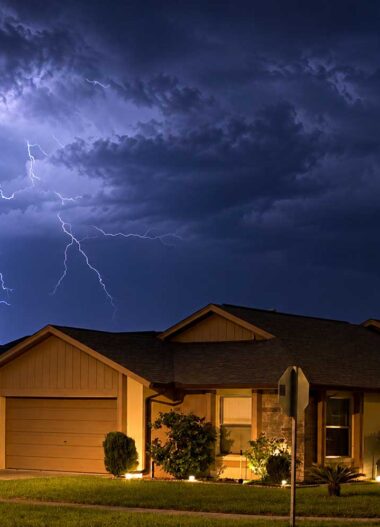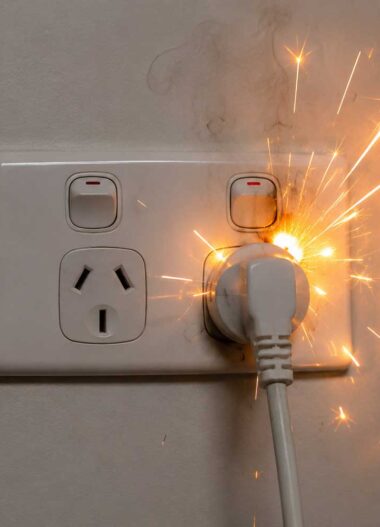



If you’ve lived in Brisbane for a while, you’ve seen the lights flicker during a storm. You might even have experienced burst bulbs or a fried appliance. Surge damage is a reality of living in this part of the world, and one of the protective layers is whole-house surge protection.
We get asked about it a lot, so here’s our honest take on whether it’s worth it for your home:
For most Brisbane homes, yes, it’s definitely worth getting a residential electrician to look at this for you. Whole-house surge protection protects every circuit, including hardwired gear like your air con, oven, and solar inverter. (It won’t stop a direct lightning strike, so keep your TV and computer on surge-protected powerboards, and check the device’s indicator after big storms.)
What Is Whole-House Surge Protection?
It’s a surge protective device (SPD) that your electrician fits in your switchboard. Most of the time it just sits there. When the voltage spikes, it reacts almost instantly.
Inside most SPDs is a metal oxide varistor (MOV). Think of it as a pressure valve for electricity. At normal voltage, it stays closed, but when a spike comes through, it opens a path and sends the extra energy to earth through your home’s earthing system.
Because it sits at the switchboard, it covers every circuit in the house at once, which is something your circuit breakers can’t do. They protect against overloads and faults, and a surge is over far too quickly for a breaker to react.
Where Power Surges in Brisbane Homes Come From
Lightning is the one everyone thinks of. A strike on or near the power lines can send a surge into your wiring without ever hitting your house. Queensland’s highest risk of severe weather usually runs from November to April, and concern about house surge protection often rises then.
Lightning isn’t the most common cause of surges, though:
- Network and utility switching: When equipment on the grid switches or a fault clears, a short spike can travel down the line to your home.
- Power coming back after an outage: The supply returning can cause a spike. During an outage, it’s worth switching off computers and TVs until the power is back and stable.
- Your own appliances: Motors create small spikes when they start and stop. Your air con compressor is a big one, and so are your fridge and pool pump.
Why a Powerboard Isn’t Surge Protection for the Whole House
Surge-protected powerboards are worth having, but they only protect what’s plugged into them. A lot of the most expensive gear in your home is wired straight into the switchboard instead:
- Ducted or split system air conditioning
- Oven and cooktop
- Hot water system
- Solar inverter and home battery
- EV charger
- Pool equipment and garage door motor
A powerboard can’t help any of these, but whole-house surge protection can.
Powerboards still have a job to do, though. The switchboard device takes the bigger surges, and point-of-use protection handles the smaller spikes that still reach your power points. The Voltora electricians recommend this layered setup.
Type 1 vs Type 2 Surge Protectors
There are two main types of whole-house surge protectors:
- Type 2: The usual choice for homes. It goes in the switchboard and handles surges from the network, nearby lightning and your own appliances.
- Type 1: Built for the much larger currents from direct or very close lightning strikes. It’s mainly used on buildings with a lightning protection system, and it’s normally paired with Type 2 protection.
Your residential electrician will tell you which one suits your home. When you compare quotes, ask which device they’re fitting and check that it:
- Is tested to the international SPD standard, IEC 61643-11
- Has a status indicator, so you can see when it needs replacing
- Has replaceable cartridges, so a worn-out unit costs less to fix
What Does Whole-House Surge Protection Cost?
For whole-house surge protection, you can expect to pay approximately:
Single-phase homes: $550–$900 including GST
Three-phase homes: $850–$1,500 including GST
These are guide prices only. The final cost depends on your switchboard’s condition, available space, the type of surge protector required and whether any electrical upgrades are needed.
At Voltora Industries, our standard business-hours callout starts at $258.50 including GST, with materials and additional labour charged separately. If your switchboard needs repairs or upgrades to meet current requirements, we’ll explain what’s involved and provide a clear quote before getting started.
What a Surge Protector Can’t Do
Surge protection lowers your risk, but it has limits:
- It won’t stop a direct strike. A direct lightning strike can carry more energy than a home SPD can handle.
- It won’t keep the power on. If you need a computer to keep running through an outage, you need a UPS (a battery backup unit).
- It needs good earthing. The device sends surge energy to earth. If your earthing is faulty, it can’t do its job, so your electrician should check that first.
- It wears out. Each surge uses up some of its capacity, and one big event can use it up completely.
How long a unit lasts depends on how many surges it takes, so there’s no set lifespan. That’s why the status indicator matters. Check the indicator once a year and after big storms, and give us a call if it shows a fault.
Brisbane Homes That Get the Most From Surge Protection
Surge protection makes the most sense if your home has:
- Solar panels or a battery: Inverters are expensive and hardwired, so a powerboard can’t protect them.
- An EV charger: It’s hardwired too, and it’s a big purchase you’ll want to look after.
- Ducted air con or smart appliances: These rely on circuit boards that surges can damage.
- A switchboard upgrade coming up: Adding protection at the same time keeps the cost down.
- A history of surge damage: If it’s happened before, it’s worth sorting out.
If you rent or live in a unit, you probably can’t make changes to the switchboard. Good surge-protected powerboards are the practical option for you.
Contact Voltora Industries for SPD Installation
In context, whole-house surge protection is a small cost compared to having all your devices fried or your home electrical system badly damaged. It’s the practical way to protect hardwired gear like your solar inverter and EV charger.
It’s something we definitely recommend at Voltora Industries, and our licensed Brisbane electricians can help with the installation of your surge protection. We’ll check your switchboard and earthing, recommend the right device and give you an upfront price before we start. Get in touch for a quote by clicking here or ringing 1300 799 430.
Frequently Asked Questions
How long does a whole-house surge protector last?
There’s no fixed lifespan. Surges use up the device’s capacity. Check the indicator regularly and after big storms.
Can I install a whole-house surge protector myself?
No. In Queensland, only a licensed electrician can do electrical work, and that includes anything inside your switchboard.
Does a whole-house surge protector protect against lightning?
It reduces the risk from nearby strikes and the surges they send along the power lines. It doesn’t eliminate the risk entirely.
Do I still need powerboards if I have whole-house surge protection?
For your most sensitive electronics, yes. A good surge-protected powerboard on your computer and TV adds a second layer of protection.
Is surge protection required in Australia?
There’s no blanket rule that existing Australian homes must have surge protection.
Lets get started