



Thinking of buying an EV? Good move. Between fuel prices going up and some genuinely impressive driving technology, it’s a decision that makes sense for a lot of Brisbane households.
But the car is only half the equation. How you charge it at home will determine whether your EV ownership journey is a success. We want to break down everything you should know about charging your EV at home in this article.
The ‘Granny Charger’ in the Boot
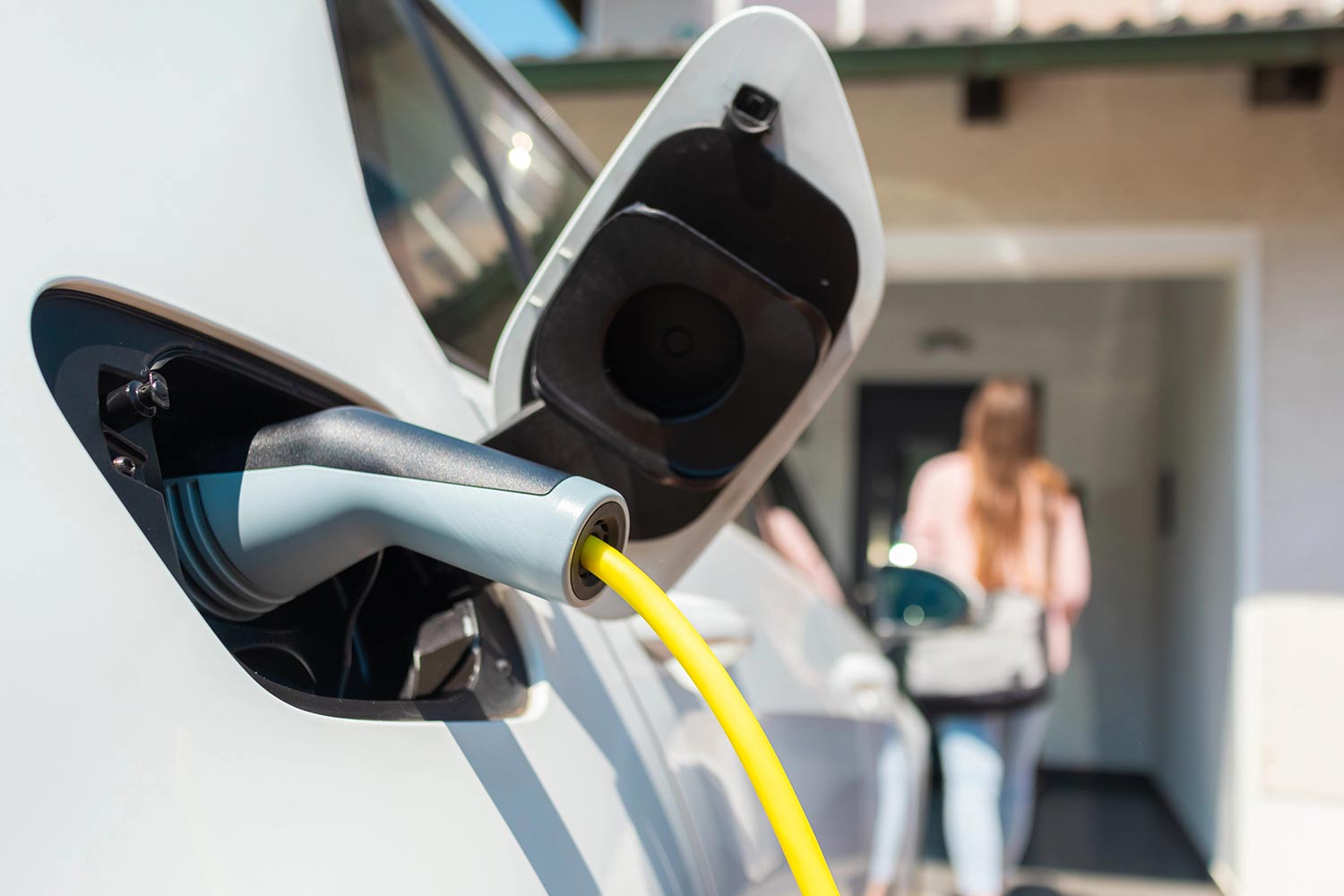
Every EV comes with a granny charger in the boot. It plugs into any power point and is great for occasional top-ups or as a backup. The problem is, it’s really slow – which will get frustrating if this is your only charger.
Granny chargers draw between 1.6kW and 2.4kW, which means waiting 25 to 35 hours to charge a 60kWh battery from flat to full. If you work all day, your overnight charge will only add 100km of range.
As well as being slow, this puts a fairly heavy load on your standard power point. It’s no safety deal breaker, but they’re not designed to consistently handle such a high load.
The answer? A professionally installed home EV charging station.
What a 7kW Home Charger Actually Delivers
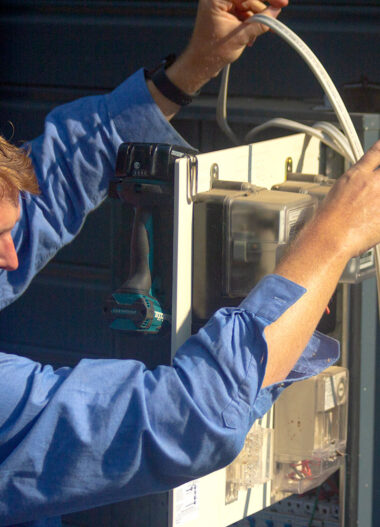
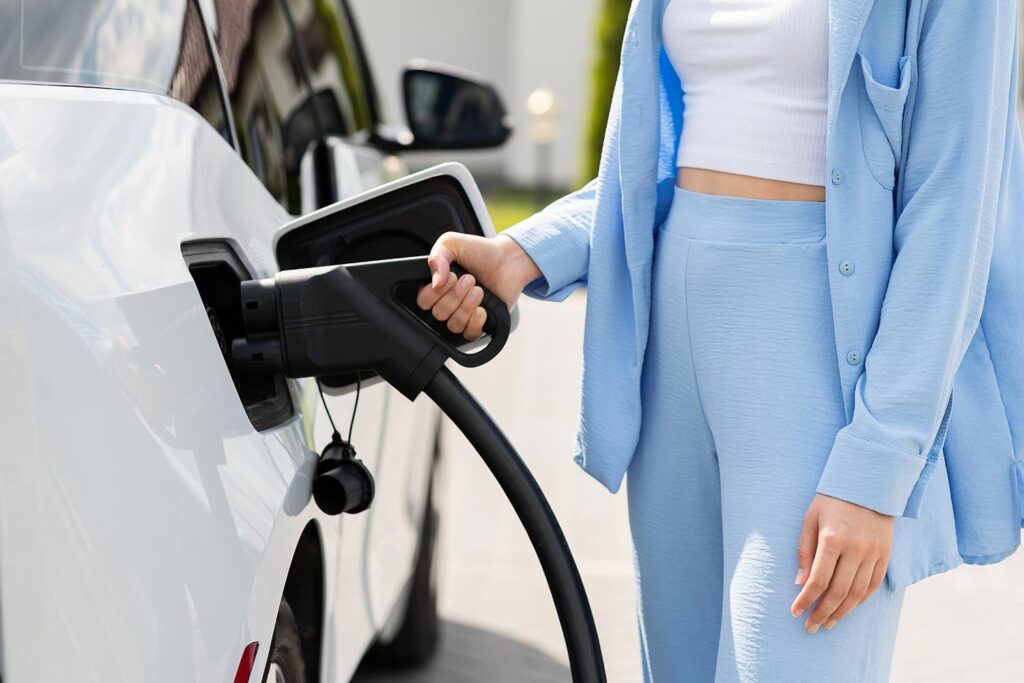
Most EV owners get a professional electrician to install a dedicated 7kW AC EV charger at their home. They’re faster and safer, sitting on a dedicated circuit so your breakers don’t get tripped when other appliances are used.
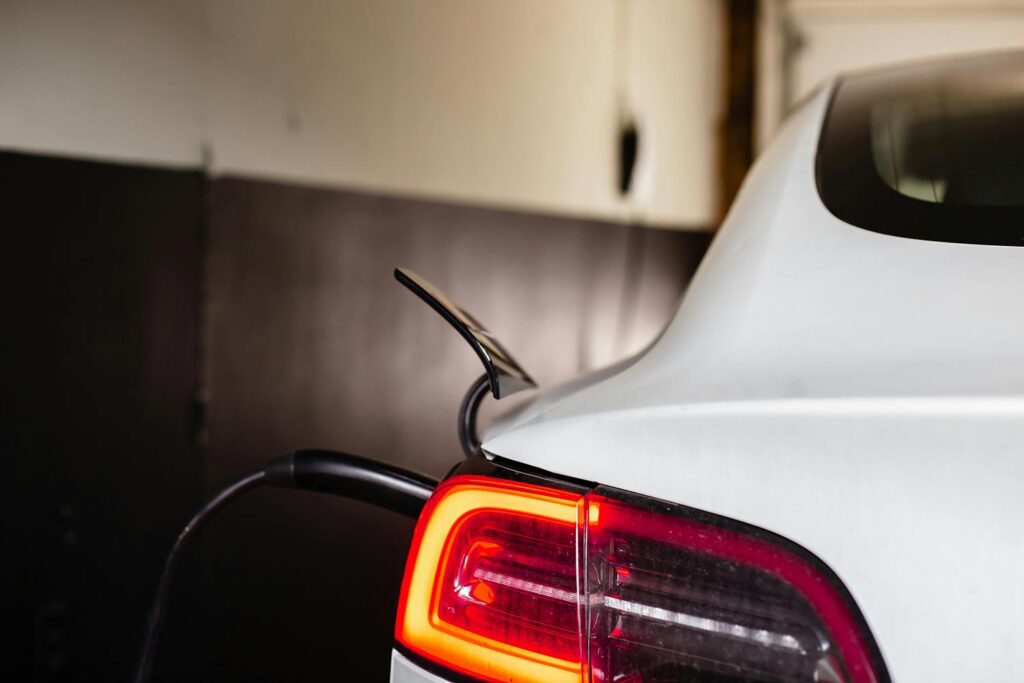
Speed is the key with this charger, with 35 to 40km of range added every hour. That’s eight hours to fully charge your EV with its 60kW battery. Plug it in when you go to bed and your EV will definitely be ready to go by the morning.
Brisbane EV Home Charging Costs
This all depends on your electricity plan. There are some EV-focused ones that offer low rates at certain times for EV owners. When you buy your EV, look around and see which one suits best.
Brisbane electricity costs between 26 and 34 cents a kWh. This means a full charge on your 60kW battery will set you back less than 20$ and give you over 300 km’s of driving range. Not bad at all when you compare it to using petrol or diesel vehicles.
If you really want to bring down running costs and future-proof your home, consider solar power – that’s where the numbers get really interesting.
Solar Power – Charge your EV for Almost) Free
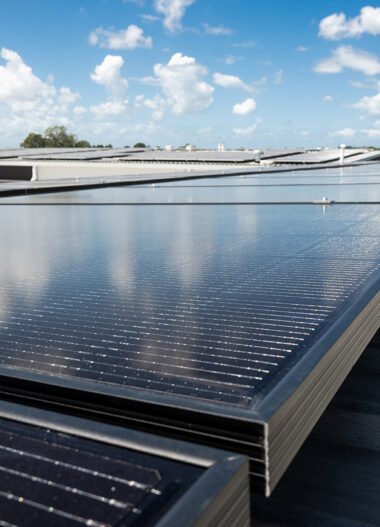
We love our solar panels in Brisbane – we’re not called the Sunshine State for nothing. We get a lot of sun and as a result we get plenty of solar uptake. If you own an EV, solar power is a great way to further reduce your travel costs and your carbon footprint.
Solar works really well if you run a home business or work remotely. Then you can charge your EV during the day when solar hours are at their peak. It literally goes straight through your panels and into your EV, and doesn’t cost you a thing.
To put it into perspective, a 10kW system can generate 35 to 40kWh of electricity a day. That’s enough to cover a daily top up of 15 to 10kWh per day to cover daily driving around in your EV. It will also leave enough leftover energy to cover your home usage.
The larger your solar system, the greater charging capacity you have. Some people choose to pair their system with a solar battery, which takes care of their home energy usage in the evenings, and can be handy if you’d like an EV topup without relying on the grid.
Voltora installs both home EV chargers and Brisbane solar systems. Having the same team plan and install both means the electrical infrastructure is designed to work together from the start. We’ll get your property energy efficient nd ensure you get the most out of your EV ownership.
Do You Need Three-Phase Power?
A 7kW charger only requires single-phase power. Most Brisbane-ites won’t need to upgrade to three-phase power, provided you’re happy with the 7kW charging speed.
If you want something faster, such as a consumer-grade 11kW or 22kW charger, you’ll need to invest in three-phase power. There’s a catch though – most EVs in Australia are only equipped for single-phase charging. So even if you upgrade to three-phase power, you won’t get a faster charge.
It’s definitely worth checking the specs and capacities of the model of EV you own if you’re considering three-phase. We’re happy to guide you with this when you book your EV charger installation.
Your EV Charger Installation Assessment When Buying an EV
Before installation, our team will assess the following:
- Switchboard condition: Older fuse-based boards often need upgrading before a dedicated EV circuit can be added. A modern board with safety switches is a prerequisite.
- Available circuits: Your switchboard needs a spare circuit or the capacity to add one. Most modern boards handle this without any problems.
- Three-phase upgrade: We’ll discuss if this is something you’re keen on, provided your EV can support it.
- Cable distances: The cable travels from your switchboard to your garage or parking area. The distance will influence the quote.
A straightforward install on a property with a modern switchboard takes three to four hours. If a switchboard upgrade is needed first, that adds time and cost. We’ll tell you that upfront.
Home EV Charger Installation Across Brisbane and SEQ
Voltora Industries has installed countless EV chargers across Brisbane and SEQ. It’s been exciting watching this technology develop and to help people embrace lower travel costs and advanced technology.
Our mobile Brisbane electricians can get you up and running with a 7kW charger so you can enjoy the true convenience of electric vehicles. If you want a solar power installation or need to upgrade to three-phase power, we can help with that too.
If you’re buying an EV, get in touch today and enjoy our clear communications and upfront pricing about your home charger installation.
Lets get started